- Choose a florist who can explain design, budget, venue logistics, setup, repurposing, and strike with equal clarity.
- Relevant portfolio work matters more than pretty close-ups: look for weddings with similar venue type, scale, and complexity.
- In Boston, delivery routes, elevators, loading windows, room flips, and venue rules can affect the floral plan as much as flower choice.
- A strong quote should clarify what is included beyond stems: labor, vessels, rentals, delivery, setup, strike, and substitutions.
Short answer: choose a Boston wedding florist who can explain the design, the logistics, and the quote with equal clarity. A beautiful portfolio matters, but it is not enough. For a real wedding, the right florist has to understand your venue, season, setup window, photography priorities, delivery route, room flip, strike requirements, and budget before they promise a look.
In 2026, couples are asking for more personal, immersive, and intentional flowers: sculptural ceremony pieces, low meadow-style tables, bolder color, edited luxury, seasonal materials, and floral moments that feel connected to the whole room. That makes choosing the florist more important, not less. The best partner is not the one who says yes to every reference image. It is the one who can tell you what will actually work in Boston, what will photograph well, where your money should go first, and what should be simplified.
Boston Flowers works from Brighton and designs wedding flowers for city venues, private homes, restaurants, hotels, and event spaces across Greater Boston. This guide is written for couples who want a serious floral partner: someone who can create beauty, protect the timeline, and keep the design coherent from bouquet to ceremony to reception.
Start with the role you actually need
Not every wedding needs the same kind of florist. Some couples need a bouquet, boutonniere, and a few delivery arrangements. Others need full floral design: ceremony installation, reception tables, candles, vessel rentals, delivery, setup, repurposing, and strike. Before comparing florists, decide which level of service you need.
If you want a simple personal-flower order, you can often work from a clear palette and delivery details. If you want arches, aisle flowers, bar pieces, sweetheart table design, ceiling flowers, staircase flowers, or a room transformation, you need a florist who thinks like a designer and producer. That means they should ask about floor plans, load-in timing, venue rules, rentals, lighting, linens, guest count, and photography angles.
A good Boston wedding florist will help you decide whether your floral scope belongs under Weddings, Events, or a smaller Custom Order. That distinction matters because the planning, labor, and mechanics are different.
Look for portfolio relevance, not just pretty photos
A portfolio should show more than flowers in good light. Look for work that resembles your actual situation: ballroom scale, restaurant tables, outdoor ceremony, modern hotel, private home, rooftop, tent, church, waterfront venue, or narrow city dining room. Flowers that look impressive in a close-up may not hold the room from ten feet away.
Study three things in the portfolio. First, scale: do the arrangements fit the space, or do they disappear? Second, consistency: do the bouquet, ceremony, and reception feel like one design system? Third, restraint: does the florist know when to edit, or is every surface treated the same way?
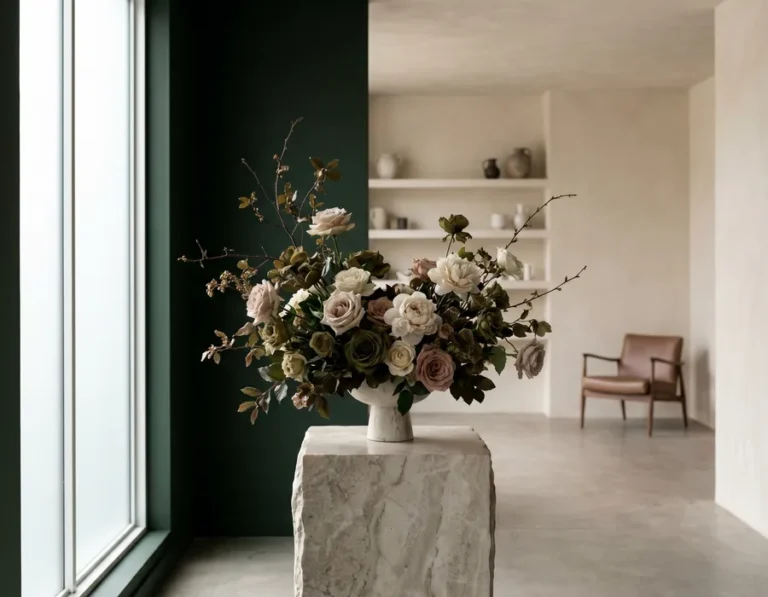
For 2026 weddings, this is especially important because trends are moving in two directions at once. Some couples want immersive, sculptural installations and bold color. Others want elevated minimalism with fewer blooms, cleaner spacing, and stronger hero flowers. A capable florist should be able to explain which approach fits your venue and budget instead of forcing every wedding into one signature style.
Ask how they handle Boston logistics
Boston weddings often have real production constraints. A florist may need to deal with hotel elevators, loading docks, limited parking, historic buildings, strict church timing, restaurant turnover, Seaport traffic, Back Bay access, Cambridge delivery routes, or a ceremony-to-reception room flip. These details affect cost, staffing, and design choices.
Ask how the florist plans delivery, setup, repurposing, and strike. If ceremony urns are supposed to move to the reception, who moves them, when, and where do they go? If an arch has to be installed in a short window, how many people are needed? If the venue requires everything removed by a certain time, is strike included in the quote?
The answer should be specific. “We handle it” is not enough for a complex wedding. You want a florist who can tell you what needs water, what can move, what cannot move safely, what requires extra labor, and what the venue needs to approve.
Understand the quote before you compare prices
Two floral quotes can look similar and mean completely different things. One may include delivery, setup, vessels, candle placement, repurposing, strike, rental pickup, and design planning. Another may only include the flowers themselves. Comparing the final number without reading the scope is how couples accidentally choose the wrong partner.
A strong quote should make the floral plan easy to understand. It should name the main pieces, describe the style, explain the scale, show what is included, and separate product from labor where appropriate. For larger weddings, ask whether the quote includes rentals, mechanics, delivery, setup, room flip support, strike, tax, and service fees.
If the budget is still flexible, read our guide to wedding flower cost in Boston before you approve a scope. It explains why design labor, venue logistics, seasonality, and installation work can matter as much as the stems themselves.
Prioritize the florist who protects the strongest moments
The best floral plan is not always the plan with the most items. It is the plan that puts the budget where guests and cameras will feel it. In most weddings, that means the bouquet, ceremony focal point, aisle or entrance, sweetheart table, bar, and one strong reception moment. Guest tables matter too, but they should support the room rather than consume the entire budget by default.
Ask the florist what they would prioritize if you had to remove 15 to 20 percent of the scope. Their answer tells you how they think. A thoughtful florist will protect the pieces that carry the visual story and simplify the items that add less impact. A weak florist may simply shrink everything, which can make the whole wedding look under-scaled.
Check their process for seasonality and substitutions
No florist can guarantee every specific flower months in advance. Weather, import delays, color availability, stem quality, and wholesale pricing can change. A professional florist should be honest about that while still protecting the final look.
Ask how substitutions are handled. The answer should focus on palette, texture, shape, and design intent. For example, if a specific garden rose is unavailable, the replacement should still support the color, scale, and mood. If peonies are out of season or below quality, the florist should offer alternatives that keep the design premium rather than quietly lowering the standard.
Seasonal thinking is also part of modern luxury. Couples in 2026 are paying more attention to local availability, waste, and reusable mechanics. A good florist can explain where seasonal flowers help, where imported flowers are worth it, and where a design can be made more sustainable without looking casual or unfinished.
Use the consultation to test communication
The first conversation should make you feel clearer, not more confused. A strong florist will ask about your venue, guest count, ceremony location, reception layout, color direction, dress, linens, lighting, photography style, must-have moments, and budget comfort zone. They should also explain what they need from you before quoting.
Bring a small number of references, not a huge folder of unrelated images. The most useful references show palette, shape, mood, and scale. Be ready to say what you like about each image: the color, looseness, structure, texture, height, negative space, or overall feeling.
Pay attention to how the florist responds. Do they translate your references into a practical plan? Do they explain tradeoffs? Do they notice venue constraints? Do they help you prioritize? That is the work you are hiring them for.
Questions to ask before booking
- Have you designed weddings with a similar venue type, guest count, and setup window?
- What floral moments would you prioritize for our budget?
- What is included in the quote beyond flowers: design planning, vessels, delivery, setup, repurposing, strike, and pickup?
- How do you handle seasonal substitutions if a requested flower is unavailable or poor quality?
- Who is onsite on the wedding day, and how many people are staffed for setup?
- Can ceremony flowers be reused at the reception, and which pieces should not be moved?
- What information do you need from our planner, venue, photographer, or rental company?
- When is the final floral plan confirmed, and how are changes handled?
Red flags to take seriously
Be careful if a florist gives a full quote without asking about the venue, timeline, guest count, or design priorities. Be careful if every answer is vague, every reference image is promised exactly, or labor is treated as an afterthought. Wedding flowers are perishable, physical, and time-sensitive. Production details are not minor.
Another red flag is a portfolio that only shows tight close-ups. Close-ups are useful, but wedding design has to work at room scale. You should be able to see how the florist handles tables, ceremony spaces, installation proportions, and transitions between areas.
Finally, be cautious when a florist pushes packages that do not match your venue. Packages can be helpful for simple orders, but a Boston wedding with a room flip, complex delivery, or custom installation needs a scope built around the actual day.
When to book a wedding florist in Boston
For full-service weddings in peak spring, summer, and fall weekends, start conversations several months ahead. For large installations, premium seasonal flowers, or complex venues, earlier is better because design time, staffing, rentals, and sourcing all need room. Smaller weddings and personal-flower orders can sometimes move faster, especially if the palette is flexible.
If your wedding is close and you need flowers quickly, be direct about the date, venue, budget, delivery address, and must-have items. A clear inquiry is easier to evaluate. For wedding-adjacent needs like rehearsal dinner flowers, welcome arrangements, or next-day thank-you deliveries, Same-Day Delivery may be possible when the design does not require full event production.
What to send in your first inquiry
Send the wedding date, venue, ceremony and reception locations, estimated guest count, floral budget range, planner contact if you have one, inspiration images, color direction, and the pieces you think you need. If you are unsure about budget, say that. A good florist can help you build a realistic range based on priorities.
The more specific the inquiry, the better the first answer will be. “We need wedding flowers” is hard to price. “We are planning an 85-person wedding in Cambridge with ceremony flowers, bridal party flowers, low reception centerpieces, and a statement bar arrangement” gives the florist enough context to respond intelligently.
The best choice is the florist who can edit
Modern wedding flowers are not about adding flowers everywhere. They are about making the right choices: what to make dramatic, what to keep quiet, what to reuse, what to remove, and what to scale properly. The florist you choose should make the wedding feel more intentional, not just more decorated.
If you are deciding between florists, choose the one who gives you the clearest path from inspiration to execution. You want beauty, but you also want judgment. In Boston, where venue logistics can shape the whole day, that combination matters.
FAQ
How do I choose a wedding florist in Boston?
Choose a florist with relevant portfolio work, clear pricing, strong communication, and practical knowledge of Boston venue logistics. They should ask about your venue, timeline, guest count, budget, and design priorities before promising a floral plan.
When should I book my Boston wedding florist?
For full-service weddings, start several months ahead, especially for peak spring, summer, and fall dates. Large installations, premium seasonal flowers, and complex venues benefit from more lead time. Smaller floral scopes can sometimes be planned faster.
What should I ask a wedding florist before booking?
Ask what is included in the quote, how they handle substitutions, whether setup and strike are included, who is onsite on the wedding day, which pieces can be reused, and what floral moments they would prioritize for your budget.
Is it better to choose a florist by style or by price?
Use both, but do not compare price without comparing scope. The right florist should match your style and explain the labor, logistics, rentals, delivery, and setup behind the quote. A lower number may not include the same work.
Can a wedding florist copy my Pinterest photos exactly?
A professional florist should use reference images as direction, not as an exact copy. Flower availability, venue scale, lighting, season, and budget all affect the final design. The goal is to preserve the feeling while building something appropriate for your wedding.