- Brand identity must dictate the floral design, not the other way around.
- Color matching requires attention to value and temperature, not just hue.
- Strategic placement at entryways and photo zones maximizes social media impact.
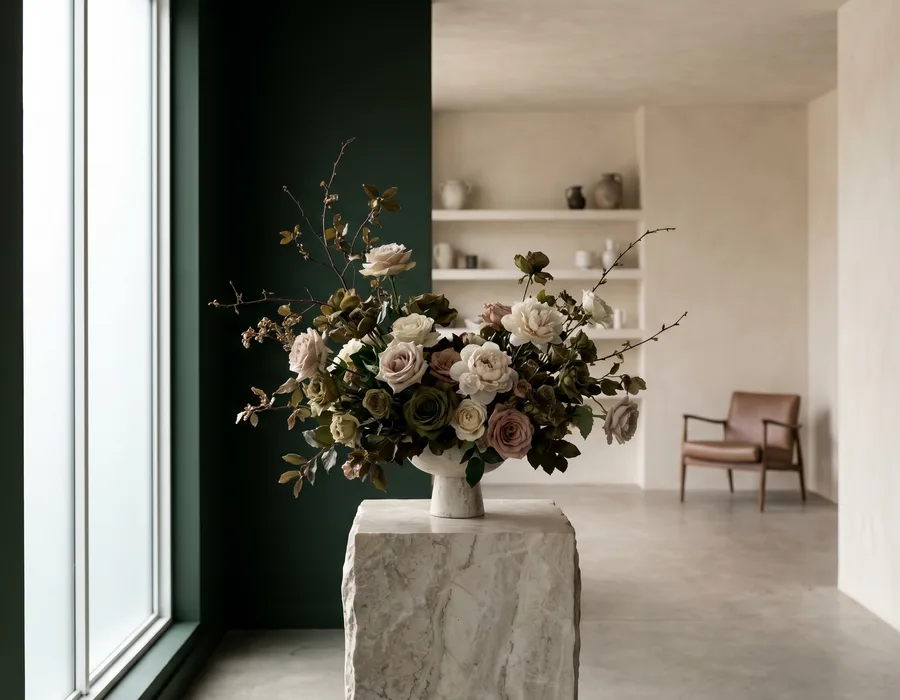
- Architectural forms and sculptural pieces outperform generic decor in luxury settings.
- Photo-first thinking ensures the installation translates perfectly in brand assets.
In high-stakes brand activations, florals are frequently relegated to the category of “event decor.” However, for a luxury launch, flowers are not just decoration—they are a physical manifestation of the brand’s visual identity. When used strategically, they reinforce trust and perceived value; when used incorrectly, they create a visual conflict that undermines the product launch.
Identity First.
A professional floral system must be dictated by the brand’s identity, not by seasonal trends. At Boston Flowers, we analyze the brand’s architecture before choosing a single stem.
- The Tool, Not the Center: The florals should guide the guest’s eye toward the product, acting as a sophisticated frame rather than a competing focal point.
- Consistency: In 2026, brands are moving toward “botanical storytelling,” using specific varieties (e.g., all-white Phalaenopsis orchids for minimalist tech) to signal their core values.
Sophisticated Color Alignment.
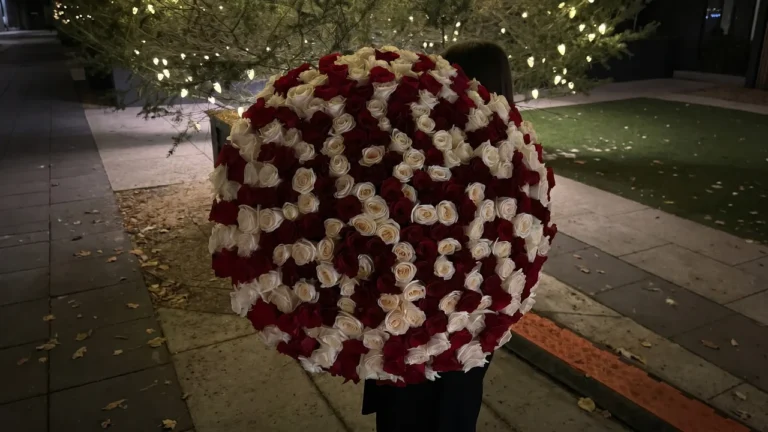
Matching a brand’s palette is about more than just picking a similar hue. We look at color temperature and visual texture. A vibrant, high-gloss red rose says something entirely different than a matte, deep-red carnation. A successful launch ensures that the floral palette complements the digital assets and physical packaging without being a “noisy” literal match.
Strategic Scale and Placement.
Impact is achieved through concentration, not distribution.
- The Entryway: Sets the expectation of quality within 5 seconds of arrival.
- The Photo Zone: Must be designed with 3D depth to provide a luxurious background for social media coverage.
- The “Hero” Product: Small, sculptural arrangements that draw attention to the product being launched without obscuring it.
The Photo Logic.
If an installation doesn’t read correctly in a smartphone camera, it has failed. We design with “Instagrammability” as a core mechanic. This means using Negative Space to ensure the brand logo remains clear and using architectural forms that maintain their shape under harsh event lighting.
When Flowers Fail.
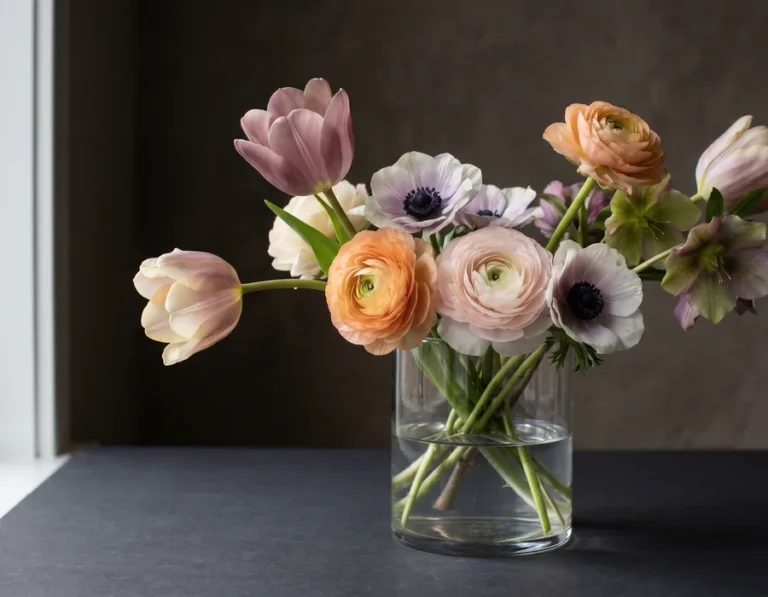
Generic “wedding-style” arrangements are the most common pitfall in brand events. Fluffy, romantic bouquets often clash with the clean lines of corporate branding. Additionally, over-scenting a room can interfere with the sensory experience of a hospitality or beauty launch. In 2026, the modern brand-facing installation is minimalist, sculptural, and scent-neutral.
Modern 2026 Approach.
Premium activations are now utilizing “living installations”—meadows that appear to grow out of the venue’s floor or cascading ceiling structures that guide guest movement. The goal is no longer to “fill a vase,” but to transform the architecture of the space to match the brand’s energy.
Boston Flowers designs brand-facing floral systems that prioritize your visual identity over decorative fluff, ensuring your launch signals precision and luxury.